Ireland – E-Invoicing and real time reporting
|
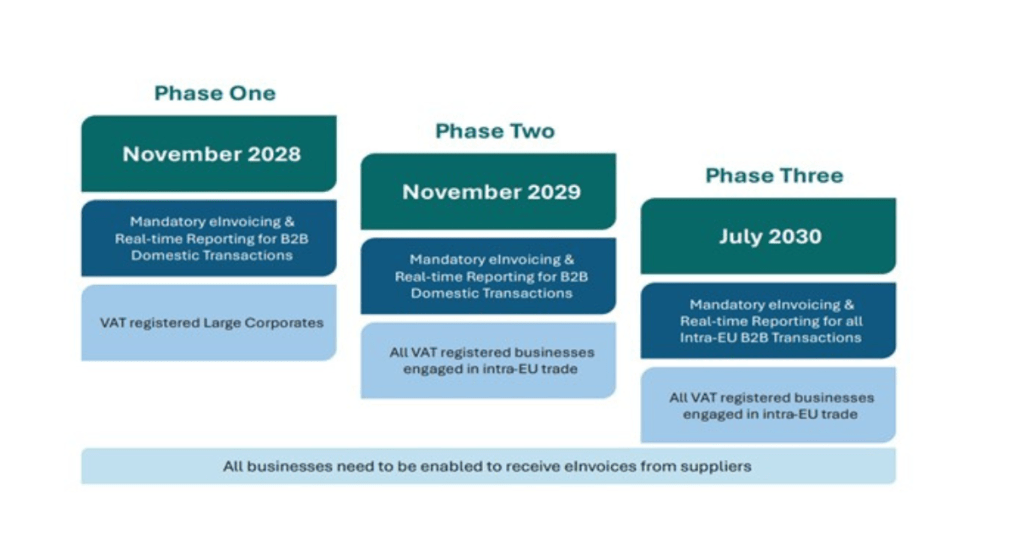
In Ireland recent Budget 2026 announcements, Revenue confirmed plans to implement a phased eInvoicing and real time reporting requirements in order to meet the EU VAT in the Digital Age (ViDA) Directive requirements by July 1, 2030. The rollout will proceed in three phases: Phase 1 – From November 2028: VAT-registered large corporate entities will be required to implement mandatory eInvoicing and real-time reporting for domestic business-to-business (B2B) transactions. Phase 2 – From November 2029: mandatory eInvoicing and real-time reporting for domestic B2B transactions will be extended to all VAT-registered businesses who engage in cross-border EU B2B trading. Phase 3 – From July 2030: mandatory eInvoicing and real-time reporting will apply to all cross-border EU B2B transactions. In addition to the above requirement, all business must be in a position to receive eInvoices from November 2028. This requirement includes business that are not required, under the phased roll-out to issue eInvoices. Ireland’s system will follow the EU e-invoicing standard (EN 16931) and use the Peppol network for structured invoice exchange. Introduction of e-invoicing and real time reporting is going to represent a significant change for some Irish businesses and will facilitate the digitalisation and automation of their internal business and reporting processes. At the same time it will provide EU Member States with additional tools to fight VAT fraud. |